Got a Swarm of Bees?
Don't panic — a swarm of bees is actually at its most docile. We'll come and collect them and give them a good home, free of charge.
Get in Touch Now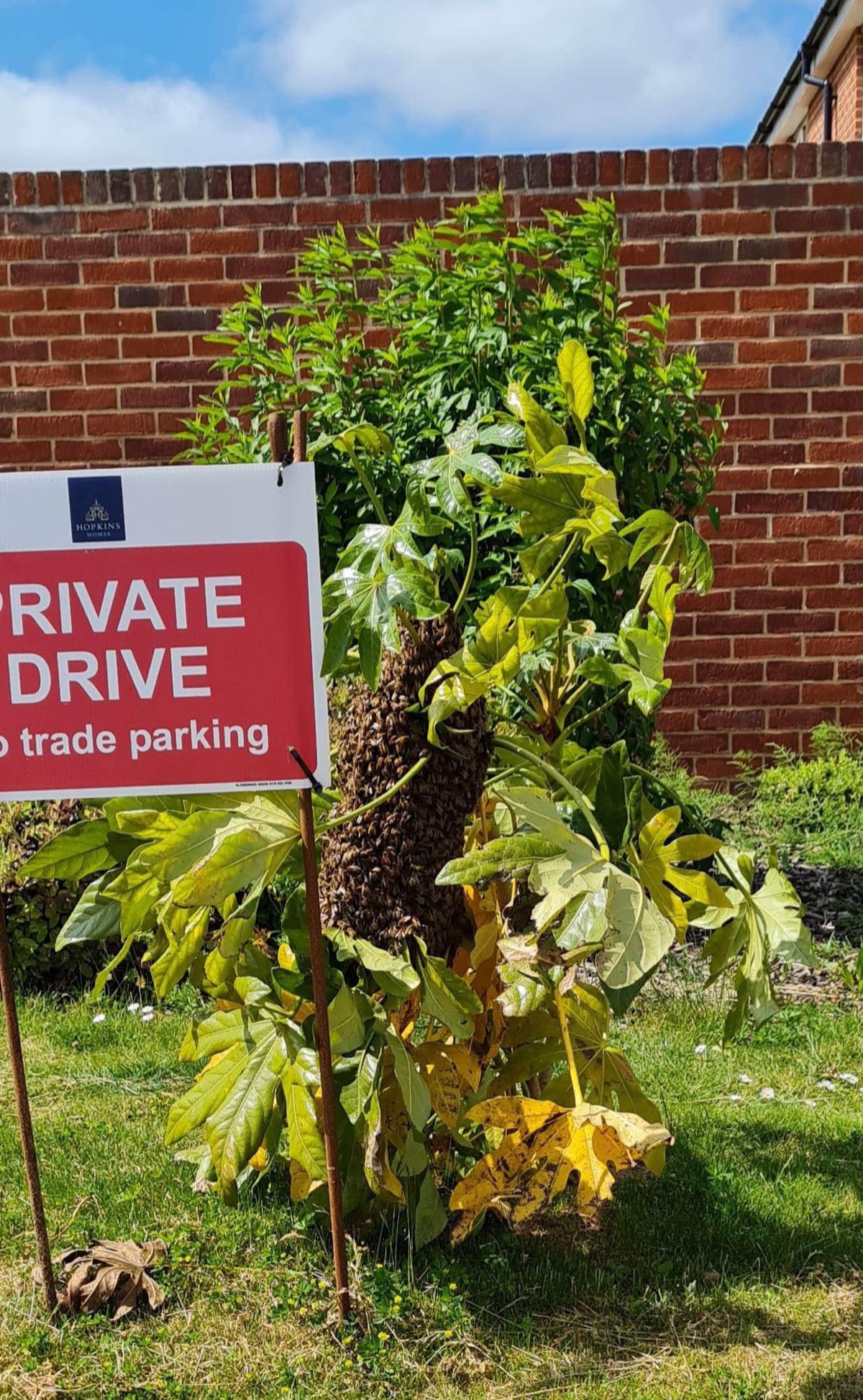
Why do bees swarm?
Swarming is completely natural — it's how honey bees reproduce as a colony. When a hive gets too full, the old queen leaves with roughly half the workers to find a new home. They'll cluster together on a branch, fence post, or wall while scout bees go looking for a suitable spot.
They usually stay put for a few hours to a couple of days. During this time they're not defending a nest, so they're far calmer than you might expect. Leave them well alone and they won't bother you — but do get them collected sooner rather than later.
If a swarm finds its way into a wall cavity, chimney, or roof space before being collected, it becomes a much harder problem to deal with. Early collection is always the better outcome for everyone.
We can help with…
- Honey bee swarms in the open — on branches, fences, walls, hedges
- Swarms in Brundall and the immediate surrounding area
- Swarms that are accessible without specialist equipment
- We don't charge for the collection
We can't help with…
- Bumblebees or wasps — these need to be left or dealt with separately
- Bees already established inside a wall, chimney, or roof space
- Swarms that are inaccessible or require specialist access
- Areas too far outside Brundall — see below for wider Norfolk help
If bees have already moved into a building, that's unfortunately beyond what we can help with. The British Beekeepers Association has useful guidance on bees in buildings.
Contact Us
If you're in Brundall or the immediate surrounding area, get in touch directly — we're usually able to collect same day. We don't charge for this service.
Not in our area?
We can only reliably cover Brundall and the villages immediately around us. For swarms elsewhere in Norfolk, the Norfolk Beekeepers' Association maintains a list of local swarm coordinators across the county who can help.
Norfolk Swarm Collectors →