There are inspections, and then there are inspections. Some you come away from scratching your head — a queen you couldn’t find, a temper you weren’t expecting, more queen cells than you know what to do with. And then there are days like this one…
This was back on the 29th of April, and I can still feel it. One of those still, warm spring mornings where everything just slows down a little the moment you put your veil on. I barely touched the smoker — a few puffs at the entrance out of habit, and that was that. They didn’t need it, and somehow you can tell that before you’ve even opened the roof.
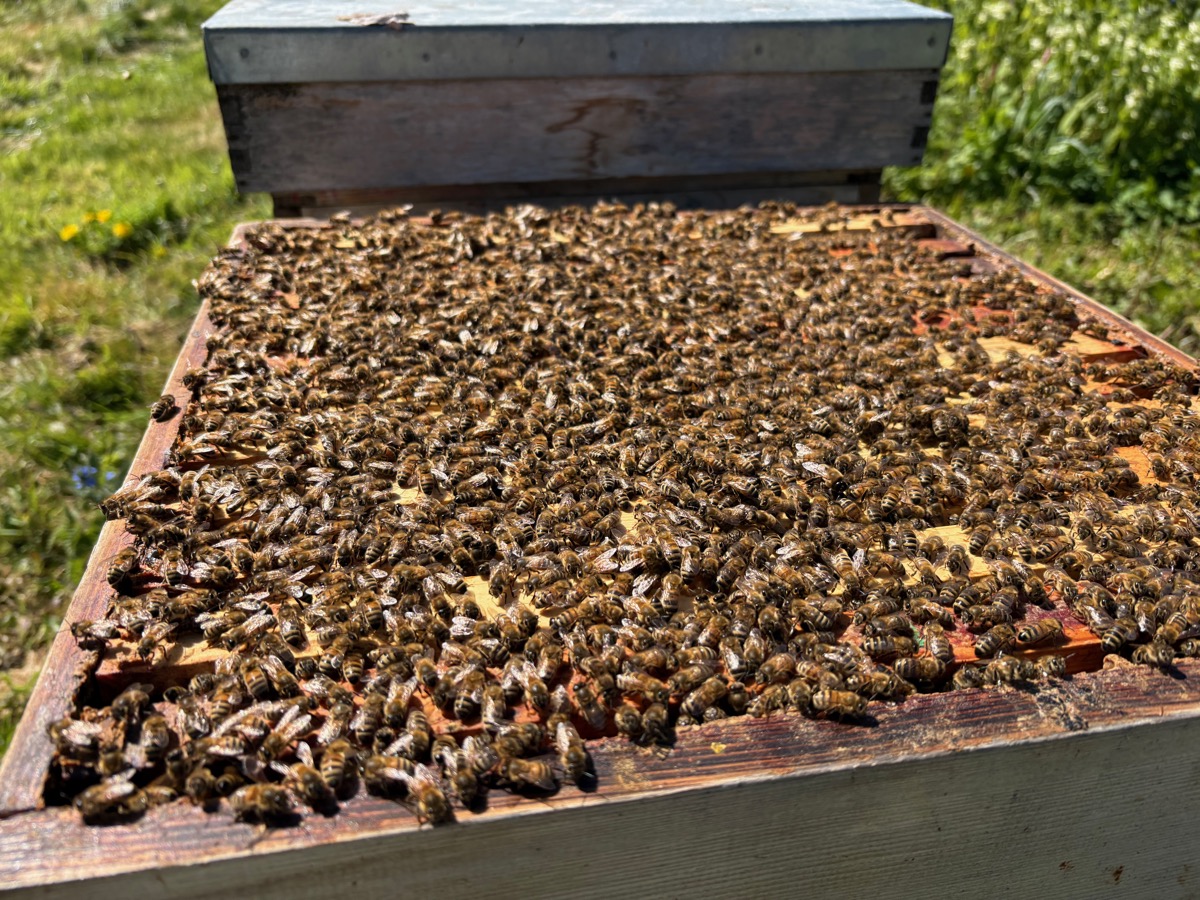
That first sight when the crown board comes off — thousands of bees, every frame covered, the whole colony going about its business without so much as a pause — is one of those moments that reminds you why you keep bees in the first place. No alarm, no fuss. Just this quiet, extraordinary industry. I find myself moving more gently on days like this, almost instinctively. They let you in, and you don’t want to break the spell.
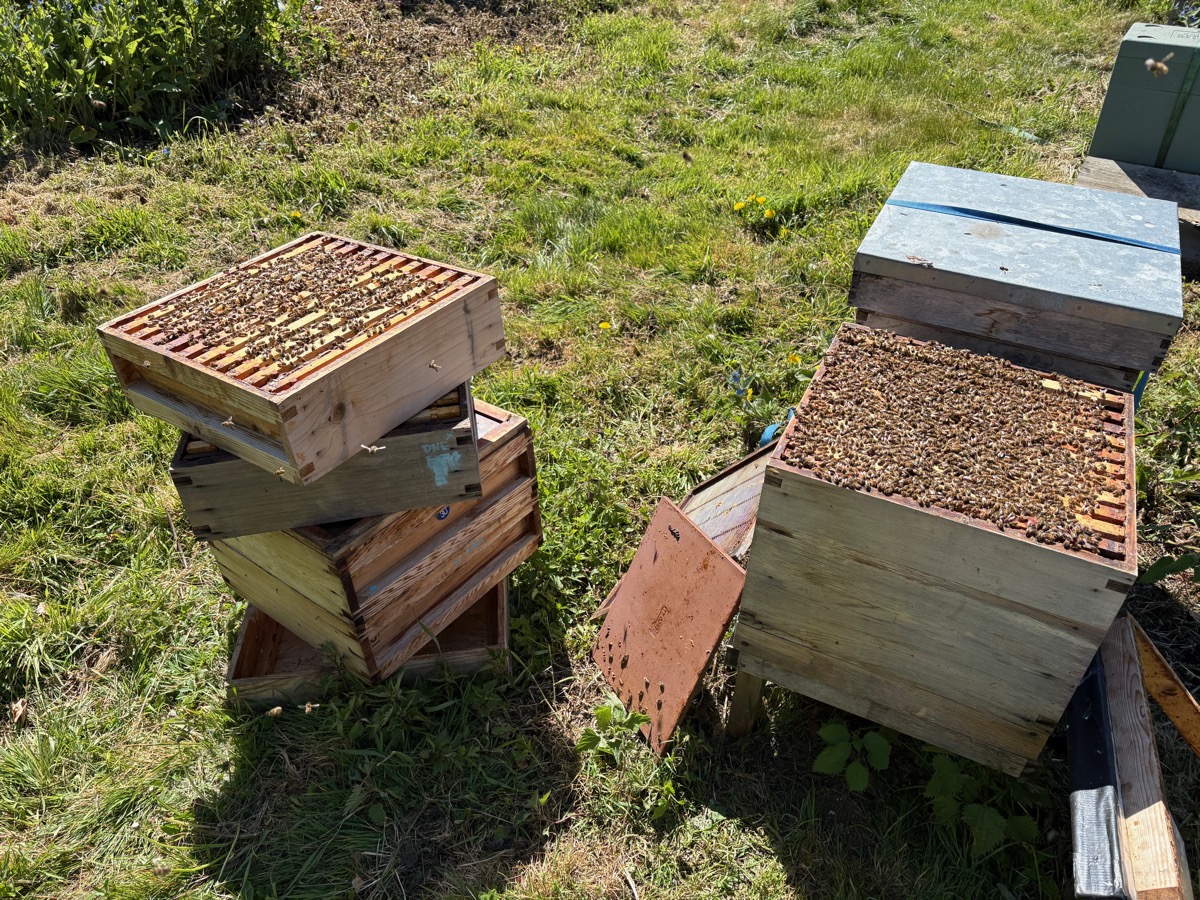
What a good inspection looks like
When beekeepers talk about a colony being “calm on the comb,” this is exactly what they mean. The bees move steadily and deliberately when you lift a frame — they don’t run, they don’t ball up, and they certainly don’t come looking for you. That temperament is partly genetics, partly the weather, and partly something harder to put a finger on. A well-settled, queenright colony with plenty of stores just feels different when you open it.
What you’re checking on every visit:
- Queen presence — eggs and young larvae are your real indicator; you don’t always need to spot the queen herself
- Space — are they running out of room? A crowded hive is a swarm looking for an excuse
- Stores — are they bringing in nectar, and do they have enough to carry them through a bad week?
- Temper and health — anything out of the ordinary gets noted
This hive ticked every box. The queen was laying beautifully — a solid, even brood pattern with very little spotting — and the whole thing unfolded at a pace I rarely get to enjoy. Frame after frame, gentle and unhurried, the bees moving calmly around my hands as if I wasn’t really there. On a different colony, on a different day, I’d have gone through a lot more smoke to get to this point. Here, it was barely needed at all.
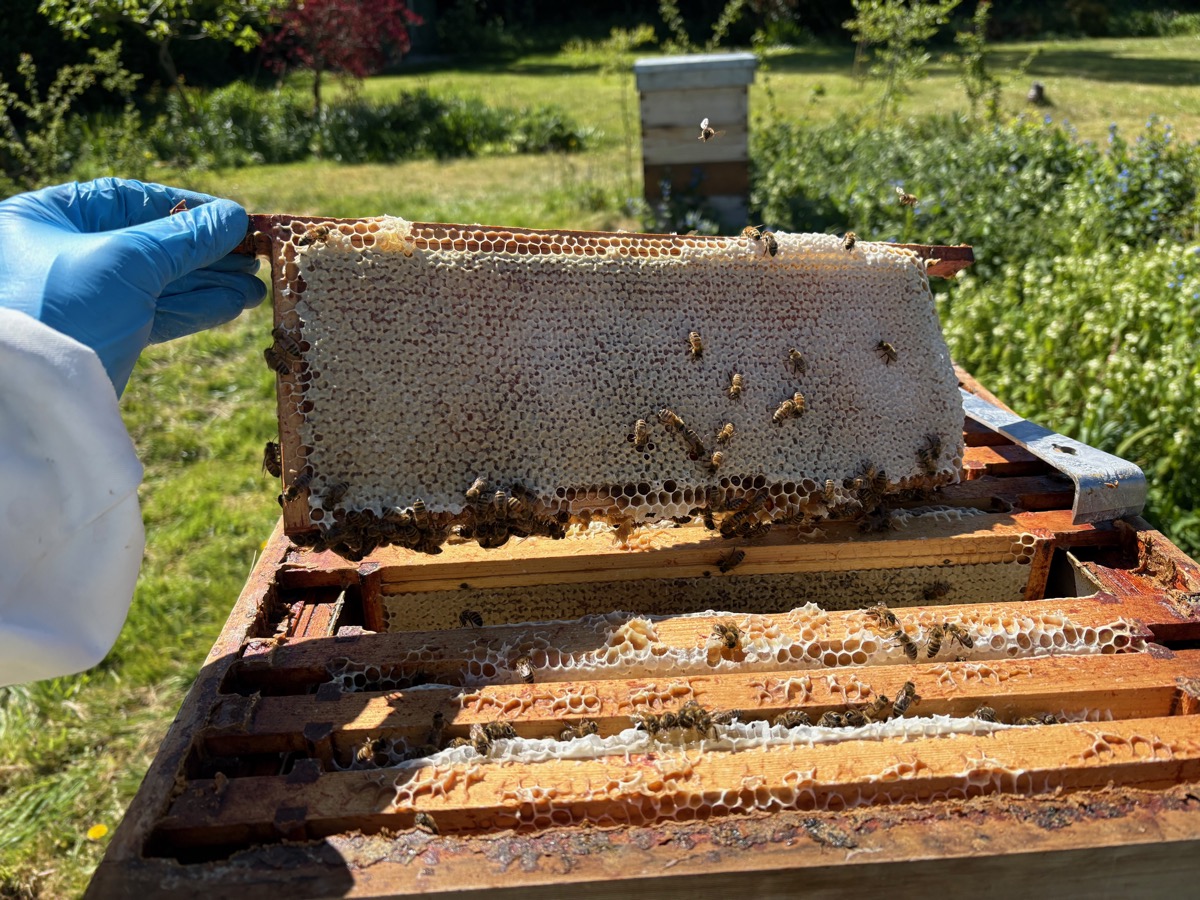
Signs of a fine season ahead
That frame of capped honey is what really stopped me. What makes it all the more remarkable is where this colony started the year — tucked up in a nucleus hive on just six frames. That’s a small, modest little cluster, the kind you nurse through the winter and quietly will on through the cold months. To go from that to this — every frame covered, boxes full, frames of capped honey already in late April — is a spring expansion that genuinely took my breath away.
The season has been exceptionally early across the board, and these bees have made the very most of it. The oil seed rape came and went ahead of schedule, and they’d clearly been working it hard. Frames like this, capped and ready before May, are not something I see every year.
The main nectar flows from clover and bramble are still ahead of us, and this colony is already in the strongest possible position to meet them. The numbers are there, the stores are there, and there’s clearly a strong, productive queen driving it all forward.
If the rest of the summer is anything like the start of it, I think this will be a very fine year indeed…
As it happens, we took our first spring crop from the apiary the week after this inspection — and it won’t be long before it’s extracted, settled, and in jars for customers to enjoy. Watch this space…