The full saying goes: “A swarm in May is worth a load of hay; a swarm in June is worth a silver spoon; a swarm in July is not worth a fly.”
It’s a piece of old beekeeping wisdom — the sort of thing passed down through generations — and like most old sayings, there’s a good deal of truth in it.
What’s it actually saying?
When a colony swarms, it splits in two. The old queen leaves with about half the worker bees to find a new home, while the hive they’ve left behind waits for a new queen to emerge and mate. Either way, both halves of the colony are temporarily weakened — lower bee numbers, no laying queen for a period, and precious little foraging while the scouts hunt for a suitable spot.
What makes the difference is timing — specifically, how much of the foraging season is left when the swarm happens.
Why May is so good
A swarm in May arrives with the whole summer ahead of it. The main nectar flows — from oil seed rape, then wildflowers, clover, and bramble as the season rolls on — are still to come. A May swarm has time to:
- Draw out fresh comb in its new hive
- Build its worker population back up
- Gather enough nectar to make a proper surplus of honey
- Still put away enough stores to see it through winter
It’s almost the ideal situation for a beekeeper who catches a swarm. You’re getting a new colony for free, right when the bees have the best possible start ahead of them.
Prime swarms and cast swarms
Not all swarms are equal — and this matters as much as timing.
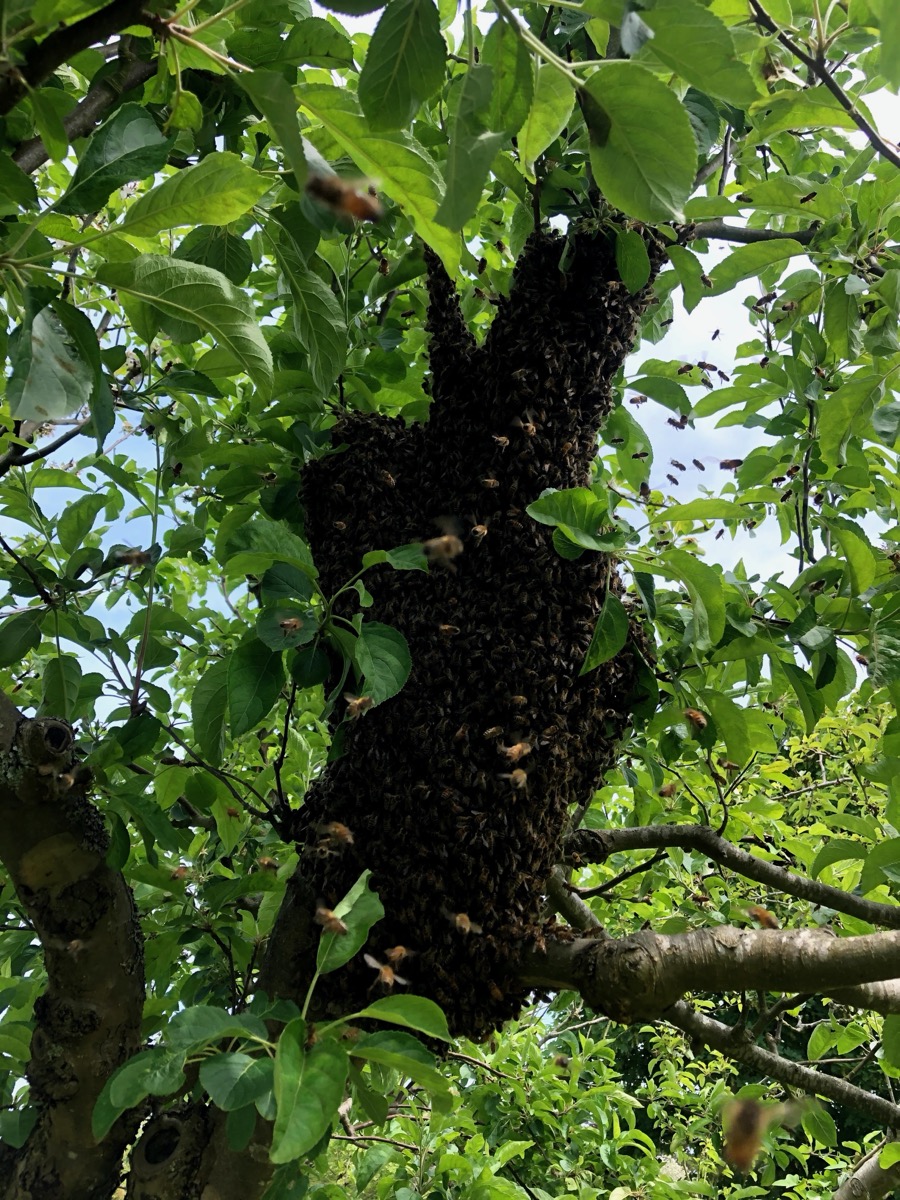
The first swarm to leave a hive is called the prime swarm. It goes with the old, mated queen and carries the largest number of bees — often somewhere between 10,000 and 20,000 workers. A prime swarm is in the strongest possible position from the moment it lands. The queen is proven, she’s been laying for some time, and she can start work in a new hive almost immediately.
After the prime swarm has gone, the remaining colony may throw off further swarms called casts, each led by a virgin queen. These tend to be noticeably smaller, and the risks are higher. The queen still has to complete her mating flights successfully before she can lay, which is never entirely guaranteed — poor weather, predation, or just bad luck can cut that short. By the time a hive is producing second or third casts, you’re looking at small clusters with an unproven queen and limited numbers.
You can usually tell the difference just by looking. A prime swarm is a substantial, weighty cluster — it tends to hang low and dense. A cast is lighter, scrappier, sometimes surprisingly small. The bees know it too; a cast’s scouts are often more frantic, as if the urgency of their situation isn’t lost on them.
How do swarms fare over winter?
The difference between a prime swarm and a cast shows up most starkly when you look at first-winter survival — and the numbers are sobering.
The clearest data comes from Professor Tom Seeley’s long-running study of feral honey bee colonies in New York’s Arnot Forest. His 2007 paper in Apidologie found that only 23% of first-year colonies survived their first winter. Established colonies that had already come through at least one winter fared far better, at 84%. That gap tells you everything about how exposed a new colony is before it has built up its stores, its numbers, and its resilience.
These are wild, unmanaged colonies in New York rather than kept colonies in Norfolk, and conditions aren’t identical. For managed UK colonies, the BBKA’s annual winter loss surveys and the pan-European COLOSS monitoring network consistently show annual losses in the range of 8–25% depending on the year — so well-managed established colonies do considerably better than Seeley’s wild ones. New colonies, whether from swarms or nuclei, likely sit somewhere between those two extremes in their first winter. There isn’t published research I’m aware of that tracks first-year managed swarm colonies specifically, but the principle holds: a small or late swarm going into October with low stores and a queen that’s had limited time to prove herself is in a fragile position.
What the research does make clear is that beekeeper intervention matters. A pan-European study published in PLOS One found that hobbyist beekeepers with less experience had roughly double the winter mortality of professionals — it’s not just about the bees, it’s about the management. Varroa treatment, autumn feeding if stores are short, and choosing a sheltered site all move the odds considerably.
A prime swarm collected in May, properly set up and kept an eye on through the autumn, has a genuinely reasonable chance of coming through its first winter. A small late cast, left entirely to its own devices, faces very long odds indeed…
June and July tell a different story…
A June swarm can still do well, but the margins get tighter. The oil seed rape is usually over by then, so the big early flush has gone. With a decent summer they’ll settle in and manage reasonable stores — but it’s less certain, and I’d always be watching closely.
By July, it’s a real uphill battle. Most of the major nectar sources are finished or finishing. A July swarm will almost certainly need feeding to survive the winter, and there’ll be no surplus honey worth speaking of that year. Hence “not worth a fly.”
What it means in practice
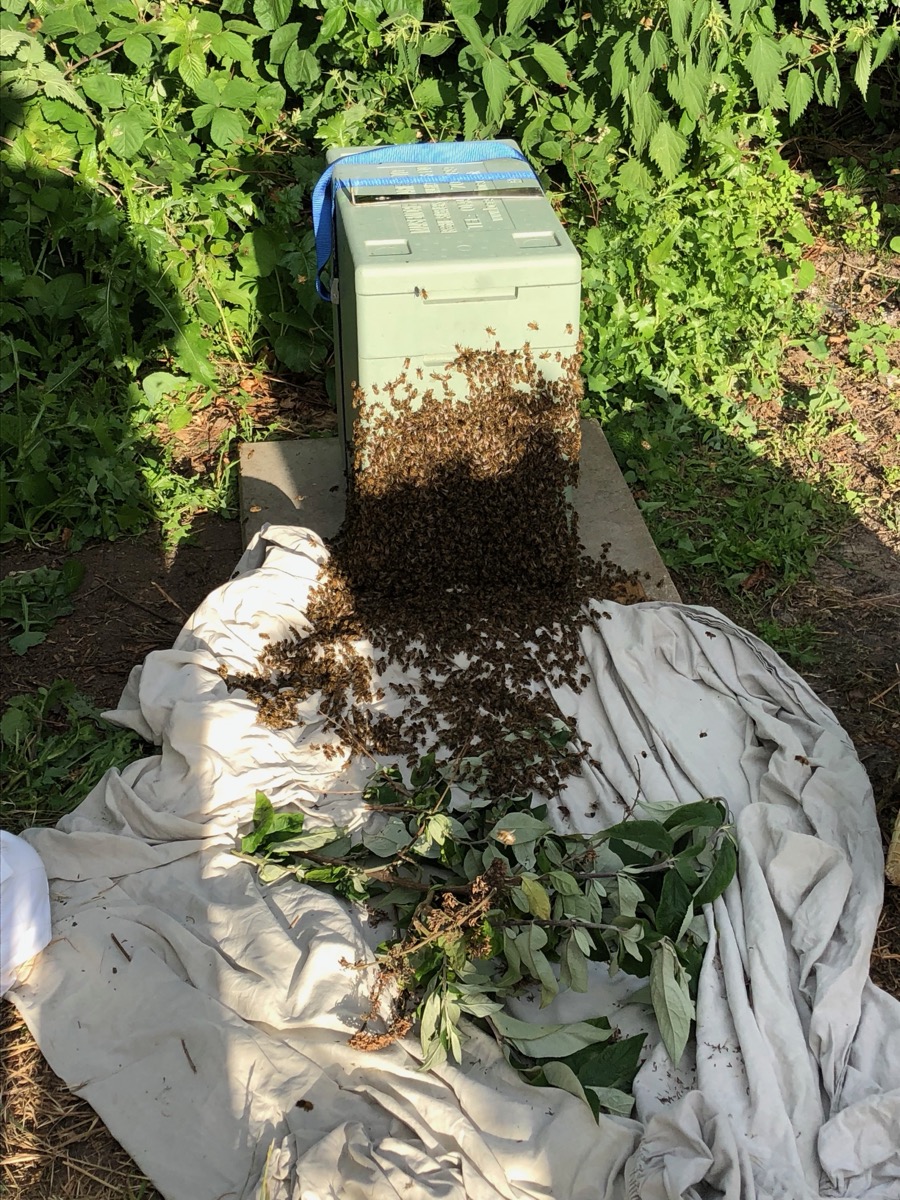
Swarm season is one of the most hectic and exciting parts of the beekeeping year. Every call I get about a swarm is a chance to give a colony a fresh start — and right now in late April and May, those swarms represent genuinely healthy, valuable beginnings.
If you spot a swarm, don’t leave it too long. The sooner they’re collected, the better it is for everyone — including the bees themselves…